
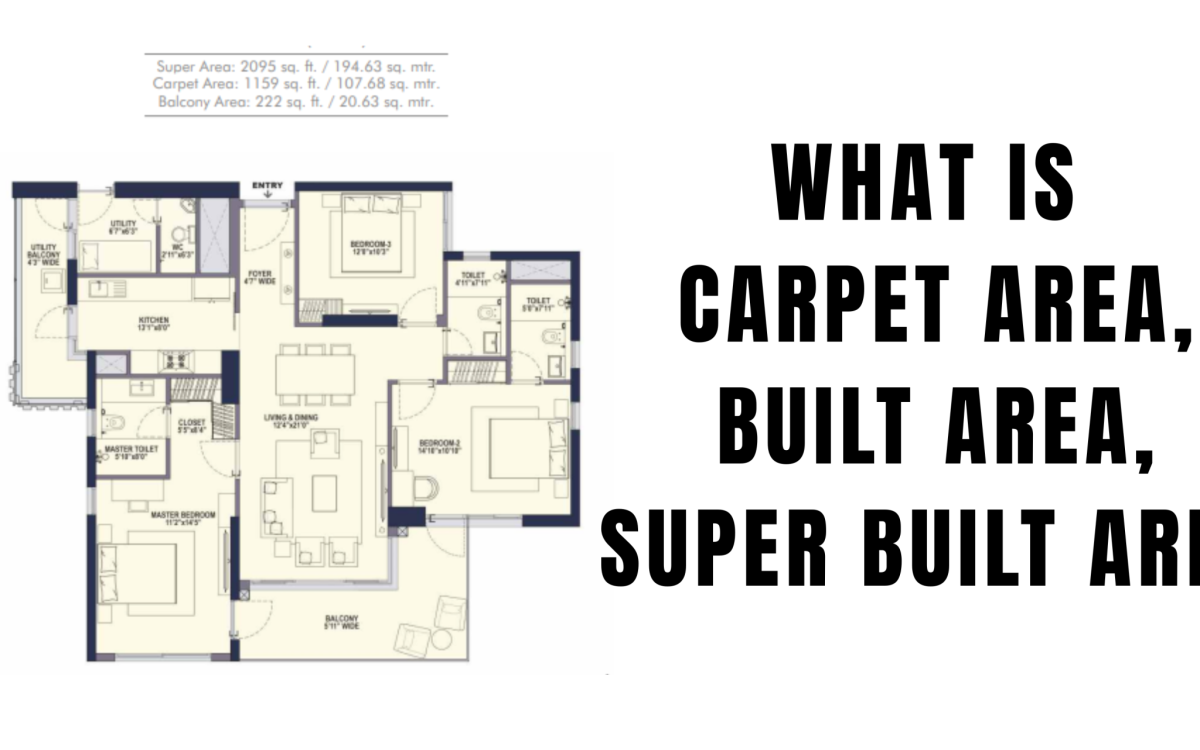
When purchasing a flat or considering an investment in real estate, one of the initial terms you will encounter from builders, brokers, or consultants is carpet area, built-up area, and super built-up area.
These three definitions have a direct impact on the price you pay, the actual space you receive, and your overall experience as a homeowner. However, many individuals misinterpret these terms, leading to confusion since builders frequently provide pricing based on varying area measurements.
In this blog, Pro Real Estate breaks down these terms in the simplest possible language, with formulas and benefits, so you can make a confident and informed decision.
Understanding Carpet Area, Built-Up Area, and Super Built-Up Area
The phrases carpet area, built-up area, and super built-up area are commonly employed in the real estate industry to categorize various types of spaces within a property, whether residential or commercial. Each term clarifies the amount of usable space, the areas shared with others, and the sections that are integral to the building’s overall structure.
Presented below is a detailed explanation of each term in paragraph format to facilitate your understanding.
What is Carpet Area?
Carpet Area refers to the actual usable space within your residence — the area where you can physically lay down a carpet. It signifies the part of your apartment that you utilize for living, daily activities, and arranging furniture.
What Carpet Area Includes
- Bedrooms
- Living room
- Dining area
- Kitchen
- Bathrooms
- Internal partition walls (in accordance with RERA guidelines)
Carpet Area Calculation Formula (RERA)
Carpet Area = Net Usable Floor Area + Internal Partition Walls
Example of Carpet Area Calculation
If your apartment includes:
- Bedroom 1 – 120 sq. ft.
- Bedroom 2 – 100 sq. ft.
- Living room – 150 sq. ft.
- Kitchen – 80 sq. ft
- Bathrooms – 70 sq. ft.
- Internal walls – 60 sq. ft.
Carpet Area = 580 sq. ft.
This 580 sq. ft. represents the actual space you will utilize daily.
The Importance of Carpet Area
- Provides a clear understanding of your home’s true usable space
- Assists you in comprehending the actual livable area within the apartment
- RERA requires builders to explicitly disclose the carpet area when marketing properties.
What Is a Built-Up Area?
The Built-Up Area is defined as the sum of the Carpet Area, the area occupied by the walls, balconies, and utility spaces. This term is also known as the plinth area.
The Built-Up Area includes:
- Carpet area
- External walls
- Balconies
- Utility areas
- Service shafts outside walls (in some situations)
The Built-Up Area includes:
- Common areas
- Lift lobby
- Clubhouse
- Staircase
- Garden, pool, or amenities
Built-Up Area Formula
Built-Up Area = Carpet Area + Wall Thickness + Balcony Area
Example-
If:
- Carpet Area = 600 sq. ft.
- Wall & Balcony Area = 120 sq. ft.
Built-Up Area = 720 sq. ft.
Why Built-Up Area Matters
In certain cities, builders continue to quote prices based on built-up area; thus, it is crucial to compare this figure with the carpet area.
What Is Super Built-Up Area?
The Super Built-Up Area refers to the overall area that encompasses your built-up area, along with a proportional share of all communal spaces within the project. This area is also referred to as the saleable area, as builders utilize it to determine the selling price of the property.
The Super Built-Up Area includes:
- Built-up area
- Lift lobby
- Clubhouse
- Staircase
- Corridors
- Entrance lobby
- Security room
- Gym and other indoor amenities (in certain instances)
Super Built-Up Area Formula
Super Built-Up Area = Built-Up Area + Proportionate Share of Common Areas
Typically, builders implement a “loading” percentage on carpet area to determine the super built-up area.
Example-
If a project features:
Carpet Area = 600 sq. ft.
Loading = 40% (common in numerous high-rise buildings)
Super Built-Up Area = 600 + 40% = 840 sq. ft.
Importance of Super Built-Up Area
- Property prices are typically assessed based on the super built-up area.
- A higher loading percentage results in paying more for a reduced amount of usable space.
- It aids in accurately comparing carpet area with super built-up area.
- This metric is beneficial for evaluating whether a project is priced fairly.
Importance of Carpet Area, Built-Up Area, and Super Built-Up Area
Here are some reasons why knowing these measurements is valuable:
1. It Enhances Property Comparison
Two properties that appear alike may have significantly different carpet areas. The relationship between carpet area, built-up area, and super built-up area can indicate whether you are acquiring a spacious residence or merely a large salable area on paper.
2. Assists in Understanding Your Financial Commitment
Grasping the concept of carpet area enables you to evaluate if the price corresponds to the actual usable space.
3. Better Space Planning
When you know the real carpet area, you can plan the real carpet area design, cabinetry, and interior layout effectively.
4. Helps You Avoid Misleading Advertisements
Some properties offer huge amenities that increase the super built-up area but don’t add anything important to your usable carpet area. Understanding the carpet area, built-up area, and super built-up area difference helps you ask the right questions.
Difference Between Carpet Area, Built-Up Area & Super Built-Up Area
Area Type | What You Get | Includes | Excludes | Typical Size |
Carpet Area | Usable indoor space | Rooms, kitchen, bathrooms | Walls, balcony | Smallest |
Super Built-Up Area | Saleable area | Built-up area + common areas | Open amenities | 25–60% more than the carpet area |
Built-Up Area | Carpet area + walls + balcony | Internal + external walls, balconies | Common areas | 25–60% more than the carpet area |
Legal guidelines and buyer rights under RERA regarding carpet area, built-up area, and super built-up area
The introduction of the Real Estate( Regulation and Development) Act, 2016( RERA), brought greater transparency and responsibility to India’s real estate sector, especially regarding area measures.
Under RERA, inventors are required to sell housing units based only on the carpet area, not built-up or super built-up areas. This ensures that buyers pay for the actually usable space they will occupy, helping them avoid misleading cost calculations based on exaggerated area terms. Key RERA provisions related to the area calculations include.
- Mandatory carpet area exposure: Builders must easily mention the carpet area of the unit in all trade agreements and marketing accoutrements. Any reference to built-up or super-built-up area for pricing is banned for sanctioned deals.
- Standardized definition of carpet area: RERA characterizes carpet area as “the net usable floor area of an apartment, excluding the area covered by external walls, but including the area covered by internal partition walls.”
- Protection against area discrepancies: Should the final carpet area delivered be less than what was promised, buyers are entitled to a refund of the excess amount paid, along with interest. Conversely, if the delivered area exceeds the agreed-upon measurement by more than 3%, the buyer may also pursue compensation or terminate the agreement.
- Legal right to check documents: Homebuyers have the legal right to check approved structure plans, layout delineations, and area specifications to corroborate the details stated by the inventor.
- Penalty for non-compliance: Builders who misrepresent area measures or fail to adhere to the RERA norms may face penalties, including fines and imprisonment.
Tips for Homebuyers: How to Use These Area Metrics Wisely
Here are some practical suggestions from Pro Real Estate to enhance your comprehension of carpet area, built-up area, and super built-up area when making a purchase:
- Always request a comprehensive area chart: A reliable builder should furnish a breakdown sheet detailing carpet area, built-up area, and super built-up area.
- Convert the quoted price into cost per carpet square foot: Even if the developer provides a rate per super built-up square foot, calculate what you are actually paying per carpet square foot.
- Review the floor plan and layout: Use the floor plan to check usable spaces, wall thickness, and the allocation of common areas.
- Negotiate the loading factor: If the loading factor is significantly high, you can negotiate — or opt for a project that has a lower loading ratio.
- Utilize RERA resources: If your project is governed by RERA, consult the RERA-approved floor plan and carpet area to verify what is promised against what is delivered.
- Estimate your usage: Think about how you plan to use the space — if balconies or utility areas are less important to you, prioritize carpet area.
- Be cautious about amenities: While amenities (like a clubhouse, gym, etc.) may be enticing, they also increase your share of the super built-up area — ensure that the expense is warranted.
Conclusion
Understanding Carpet Area, built-up area, and Super built-up Area is essential for every homebuyer who wants to make a confident and informed property decision. These measures directly impact your usable space, the price you pay, and the long-term value of your investment. By fastening on the carpet area and following RERA guidelines, you can avoid deceiving information and choose a home that truly offers what you need.
Pro Real Estate is there to help you compare properties, verify area calculation, if you’re planning to buy a flat, and want expert guidance.
Contact Pro Real Estate and move one step closer to finding your ideal home.
FAQs
What is the difference between carpet area and built-up area?
Carpet area is the actual usable space inside the home, while built-up area includes the carpet area plus walls, balcony, and utility spaces.
How is the super built-up area calculated?
Super built-up area is calculated by adding the built-up area and your proportional share of the project’s common areas (also known as loading).
Why do builders quote prices based on super built-up area?
Builders use the super built-up area because it includes common spaces and amenities, which increases the saleable area used to calculate the final property price.
What loading percentage is considered good in residential projects?
A loading of 25%–35% is considered normal; anything above 40% means you pay more for less usable space.
How can Pro Real Estate help me verify carpet, built-up, or super built-up area?
Pro Real Estate helps buyers cross-check builder calculations, compare properties, and ensure transparency as per RERA guidelines.


